Kaif
If you searched for fundfireinsight.com, you may be trying to work out whether it’s the well-known FundFire news service, an unrelated site, or something you should avoid. This guide explains what’s known, what isn’t, and how to judge a finance website before you rely on it.
Key takeaways: Fundfireinsight.com is a separate website from FundFire (fundfire.com). FundFire is an established institutional news service, while fundfireinsight.com has no verified ownership or editorial details in the sources I found. Treat its content as unverified and cross-check any financial claim.
What Is Fundfireinsight.com?
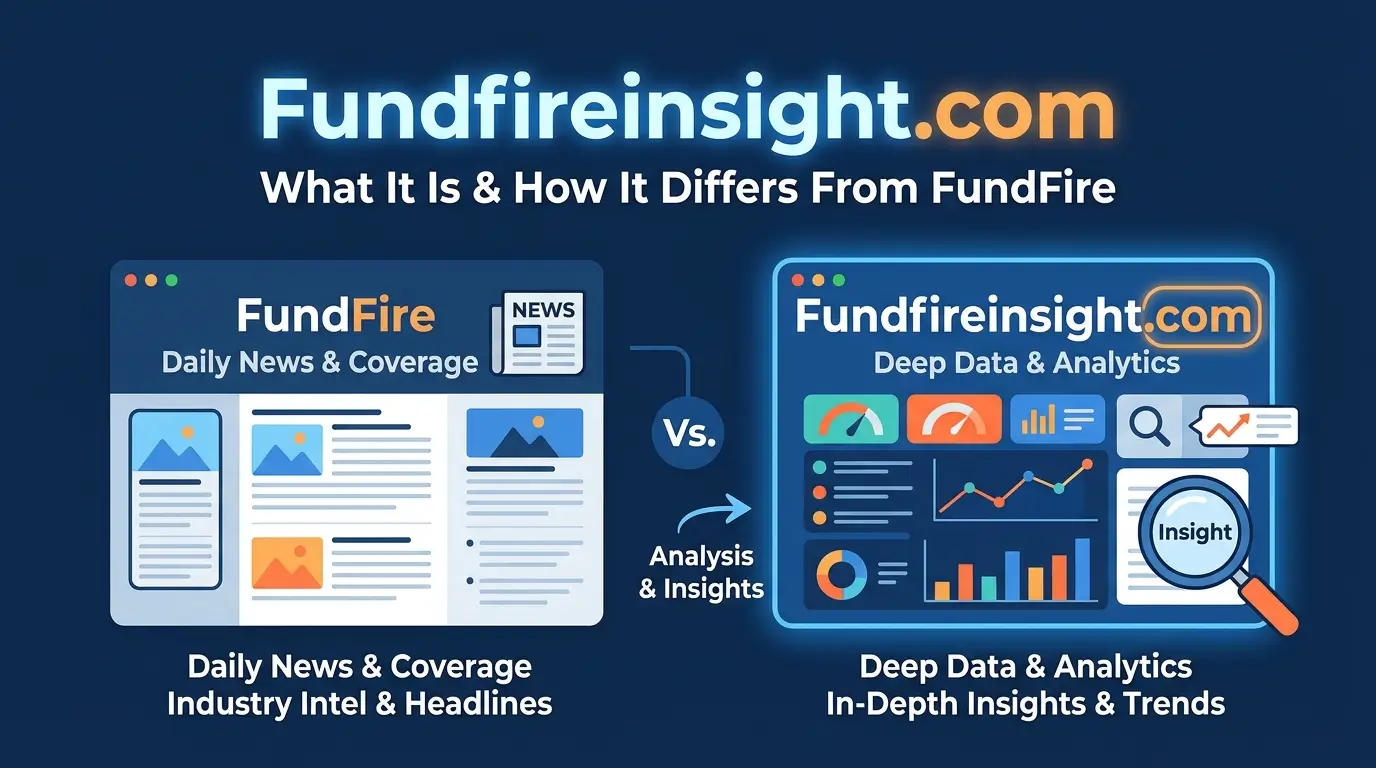
Fundfireinsight.com is a finance-focused website described online as covering markets, institutional asset management, and investment strategy. It is not FundFire (fundfire.com), the established news service for institutional and high-net-worth asset management. I found no verified ownership or editorial details for fundfireinsight.com, so treat it as unverified and cross-check anything important.
One article describes it as a finance-focused site that appears to cover market trends, institutional asset management, and practical investment strategy, while stressing that its trust profile must be evaluated carefully. That wording is hedged because the writer doesn’t know much either.
What the public descriptions leave out
The pages I found don’t name an owner, editor, or company. They also don’t show author credentials, an editorial policy, or a corrections process. For a finance site, those are the details that matter most.
Is Fundfireinsight.com the Same as FundFire?
No. The two share most of a name, but nothing I found links them.
The one article that addresses the question directly says plainly that fundfireinsight.com is not the same as FundFire, and warns readers against assuming a connection to the Financial Times brand.
Side-by-side comparison
| Feature | FundFire (fundfire.com) | Fundfireinsight.com |
|---|---|---|
| What it is | Institutional news and intelligence service | Finance-focused website, per public descriptions |
| Parent | Described as a service from the Financial Times | No verified owner found |
| Focus | Competitive intelligence for the separately managed account industry, with sections on personnel moves, plus webinars, polls, and videos | Markets, asset management, and strategy, described in general terms |
| Audience | Investors, managers, and consultants; LinkedIn lists over 99,000 readers | Not specified |
| Editorial details | Named reporters and a newsroom | Not found |
| Verification | Described by publishers and event organizers | Mostly secondhand descriptions |
Reader counts for FundFire vary by source and date. An older Informa Connect profile cites over 80,000 readers, while LinkedIn cites over 99,000. Treat both as self-reported marketing figures.
What Is FundFire?
Since the two names get confused, here is what the established service offers.
FundFire is described by Informa Connect as a service from the Financial Times and a news source for institutional, high-net-worth, and alternatives markets. Its FundFire Alts edition publishes twice weekly on private equity, private credit, hedge funds, and real assets. Its profile also mentions a Search & Hire database tracking manager searches, hires, and terminations.
It’s a professional subscription product aimed at industry insiders, which is very different from a general-interest finance blog.
Why People Confuse the Two
- Similar spelling. Adding “insight” makes the name read like a sub-brand.
- Search results. Pages about FundFire appear alongside pages about the lookalike domain.
- Shared topics. Both are associated with asset management.
A lookalike name doesn’t prove bad intent, but it does mean you shouldn’t give the site the credibility of the established brand.
How to Evaluate Fundfireinsight.com or Any Finance Website
Financial content can affect real money decisions, so the bar should be higher than for a lifestyle blog.
1. Identify who runs it
Look for a named company, editor, and contact details. If you can’t find them, that’s a limitation.
2. Check the authors
Do articles carry real bylines with relevant credentials? Anonymous or generic authorship is a warning sign for investment content.
3. Look for sources
Reliable finance articles link to regulatory filings, company reports, or recognized data providers. Be cautious about unsourced claims and performance promises.
4. Check for disclosures
Sites that accept contributed content should label sponsored posts and disclose affiliate relationships. The article I found notes that sites built mainly around contributed content can drift into thin publishing when editorial standards are unclear.
5. Compare with established sources
For any significant claim, check a regulator, a major newsroom, or the company’s own filings. In the United States, the SEC’s EDGAR database hosts official company filings.
6. Don’t rely on SEO metrics as proof
The same article cites a low Domain Rating and roughly 55 backlinks for the site, though it describes the figures as coming from prompt data rather than verified analytics. Low or high link counts say little about accuracy either way.
7. Be skeptical of urgency
Pages that push “limited-time” investments, guaranteed returns, or private tips are red flags regardless of how professional the design looks.
Is Fundfireinsight.com Safe?
I can’t confirm either way. For ordinary reading, the risk is the same as for any unfamiliar website. Avoid entering personal or payment details, downloading files, or following links to investment offers until you’ve verified who operates it.
For decisions about money, the bigger risk isn’t malware. It’s relying on information that hasn’t been checked. The article itself cautions that investment decisions should not rely on a single niche website.
Pros and Cons
Possible advantages
- May offer general finance explainers, as some descriptions suggest
- Free access appears likely, though I couldn’t confirm it
- Covers topics of broad interest to finance readers
Limitations
- Ownership and editorial standards aren’t publicly verified
- Easily mistaken for FundFire
- Limited independent coverage
- Not a primary source for investment decisions
Who Should Use Which?
- Industry professionals who need institutional news, hiring moves, and allocation trends are better served by FundFire or comparable subscription services.
- General readers looking for finance background can use fundfireinsight.com for orientation, then verify with primary sources.
- Marketers considering a placement should confirm ownership, link policies, and page-level performance first.
Frequently Asked Questions
What is fundfireinsight.com?
A finance-focused website described as covering markets, institutional asset management, and investment strategy. Its ownership isn’t verified.
Is fundfireinsight.com the same as FundFire?
No. FundFire (fundfire.com) is a separate, established news service for institutional and high-net-worth asset management.
Is fundfireinsight.com part of the Financial Times?
No evidence shows a connection. FundFire is described as a Financial Times service, but that doesn’t extend to this domain.
Is fundfireinsight.com legit?
It can’t be confirmed from public information. Verify its operator and editorial standards before relying on it.
Is fundfireinsight.com safe to visit?
No specific safety issue was found, but I couldn’t verify the site. Avoid sharing personal or payment details until you’ve checked it.
What does FundFire cover?
Competitive intelligence on institutional and high-net-worth asset management, including hires, fund launches, and allocation trends.
Can I make investment decisions from fundfireinsight.com?
No. Use it for general background at most, and confirm anything important with regulators, filings, or a licensed professional.
This article is general information, not financial advice.
Conclusion
Fundfireinsight.com is a lookalike name, not the FundFire news service, and the public record about it is thin. That doesn’t make it harmful, but it does mean the burden of verification falls on you. Confirm who runs a finance site, check its sources, and never rest an investment decision on a single unverified page.