Kaif
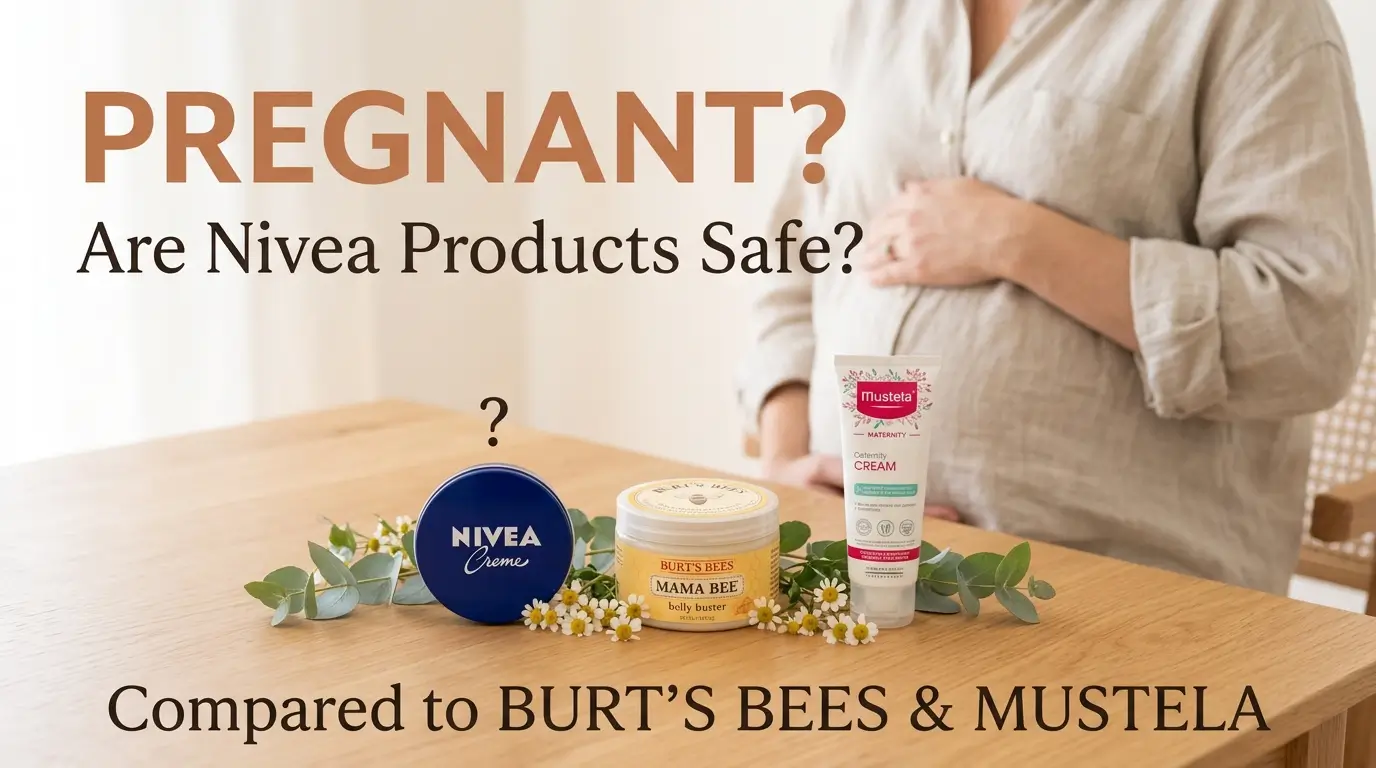
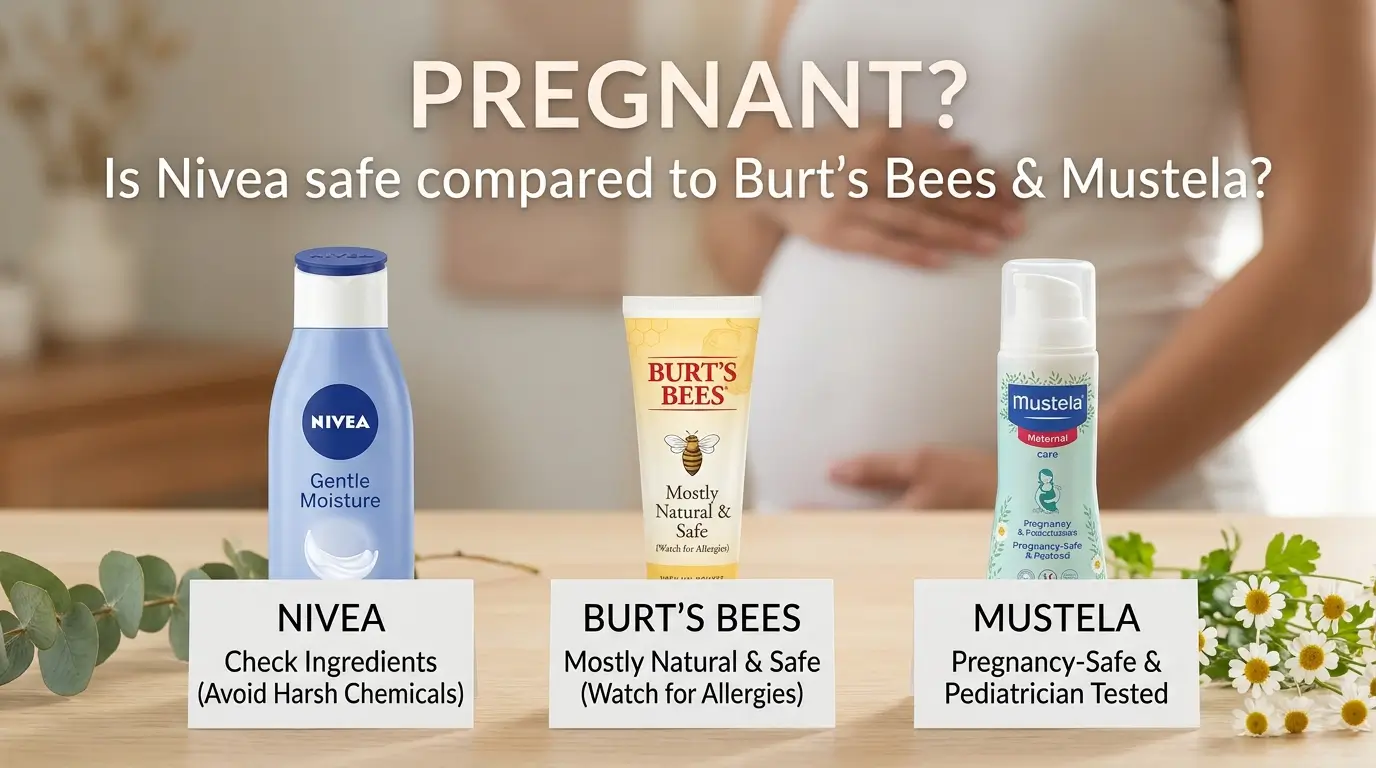
If you’re pregnant and wondering whether Nivea is safe compared to Burt’s Bees or Mustela, here is the short version: all three brands make products that are fine for most pregnancies, and all three make products worth skipping. The brand name matters far less than the ingredient list. This guide shows how to judge any product, how each brand’s range compares, and what to do if your skin acts up.
Quick answer: Most basic Nivea, Burt’s Bees Mama Bee, and Mustela maternity moisturizers are generally considered fine in pregnancy because they avoid the main ingredients experts flag, such as retinoids and hydroquinone. Safety depends on the specific product, not the brand, so check each label and ask your midwife or doctor.
Key takeaways: Judge products by ingredients, not brand. Avoid retinoids and hydroquinone. Be cautious with anti-aging, brightening, cellulite, and chemical-SPF products. Fragrance-free is gentler on sensitive skin. Stretch-mark claims are mostly marketing.
This is general information, not medical advice. Your own provider knows your history.
Is Skincare Generally Safe During Pregnancy?
Yes, for most products. Most over-the-counter skin care products are considered safe in pregnancy, though products containing retinoids, hydroquinone, and phthalates may not be. Your routine rarely needs a major overhaul. Skin may simply behave differently: drier, oilier, more sensitive, or prone to breakouts and dark patches.
The research has a limit worth knowing. Studies on the safety of skin care chemicals in pregnancy are limited, and many are anecdotal, case-specific, or animal-based. That is why experts lean cautious with a short list of ingredients rather than declaring whole brands safe or unsafe.
Which Ingredients Should You Avoid While Pregnant?
Use this checklist on any label, from any brand.
| Ingredient or product type | Why people avoid it | Where it hides |
|---|---|---|
| Retinoids (retinol, retinyl palmitate in strong doses, tretinoin, adapalene) | Oral retinoids cause birth defects; topical risk is likely low but avoidance is advised | Anti-aging creams, acne treatments, “firming” lotions |
| Hydroquinone | Skin absorbs roughly 35 to 45 percent of it, so professionals advise avoiding it in pregnancy and lactation | Brightening and dark-spot products |
| Phthalates and formaldehyde | Linked to hormone and development concerns | Some fragranced products and nail items |
| Oxybenzone (chemical sunscreen filter) | ACOG is reported to advise avoiding sunscreens containing oxybenzone during pregnancy | Chemical sunscreens, SPF body lotions |
| Cellulite creams with caffeine or aminophylline | These are flagged for caution, though caffeine in small amounts is considered relatively safe | Firming and slimming gels |
| Essential oils in strong doses | Limited safety data; can irritate | “Natural” belly oils and balms |
What about acne and exfoliating acids?
Not every active is off limits. ACOG is reported to consider azelaic acid, glycolic acid, topical benzoyl peroxide, and topical salicylic acid safe for acne in pregnancy. Still, confirm the concentration and your provider’s advice, especially for peels.
Is fragrance harmful?
Not proven harmful, but it’s a common irritant. Pregnant skin can become more sensitive, and fragrance, alcohol, and some preservatives are common culprits for irritation. If a lotion that you tolerated before now stings or itches, switch to a fragrance-free option.
Is Nivea Safe During Pregnancy?
Many Nivea products are fine, but the range is broad, so you need to look at each one.
Likely low concern: Classic items like Nivea Creme and standard body lotions are simple, emollient formulas built around ingredients such as glycerin, mineral oil, petrolatum, and panthenol, none of which is typically flagged in pregnancy. A basic cleanser or plain moisturizer from any large brand usually fits this group. it
Check the label first:
- Anti-aging and “firming” lines. Some products in these ranges contain retinol or retinyl esters. One database-style review advises skipping retinol-based or strong anti-aging lotions and being cautious with chemical SPF blends, noting that formulas vary by region and batch. It specifically recommends checking the label each time you repurchase.
- Brightening or “extra white” lotions, which can contain skin-lightening ingredients and chemical sunscreen filters.
- SPF lotions. Look for zinc oxide or titanium dioxide, not oxybenzone. The FDA has proposed treating titanium dioxide and zinc oxide as generally recognized as safe and effective sunscreen ingredients.
- Cellulite gels, which often contain caffeine or similar actives.
Some Nivea Q10 firming products are marketed for belly massage, but treat that as brand positioning and confirm the exact formula.
Verdict: Nivea’s plain moisturizers are generally unremarkable in pregnancy. Its treatment products need label checks.
Is Burt’s Bees Safe During Pregnancy?
Burt’s Bees sells a dedicated Mama Bee line, and its belly butter is the most relevant product.
What the brand states: The Mama Bee Belly Butter is described as a 99 percent natural-origin, fragrance-free formula for the stretching skin of pregnancy and after birth. It is formulated without phthalates, parabens, petrolatum, or SLS. The listing notes it has a natural cocoa-butter scent from its ingredients, which is different from added fragrance.
Things to check:
- Nut and coconut allergies. The ingredient list includes sweet almond oil, coconut oil, shea butter, and sunflower seed oil. If you have a nut allergy, read the label.
- Breastfeeding. Directions say to wipe off breasts before nursing.
- “Natural” isn’t a safety guarantee. Other Burt’s Bees products, such as scented lotions or ones with essential oils, are not specifically pregnancy products. Apply the same ingredient checklist.
Verdict: The Mama Bee belly butter looks like a low-risk, gentle choice for most people. Burt’s Bees overall is not automatically safer than other brands.
Is Mustela Safe During Pregnancy?
Mustela has a Maternity range built for pregnancy, including a stretch marks cream in fragranced and fragrance-free versions.
What the brand states: The cream is made with 97 percent ingredients of natural origin and can be used morning and evening from the first month of pregnancy, including during breastfeeding. Listed ingredients include avocado oil, avocado peptides, passion fruit polyphenols, and witch hazel extracts. Directions advise not applying it to recent cesarean scars.
Things to check:
- Choose the fragrance-free version if you’re sensitive or nauseated by smells. A fragranced version is also sold.
- Marketing claims. Retailers repeat a brand-reported figure that most women in a trial didn’t develop stretch marks. Take that cautiously; as far as I know, reviews of clinical evidence have found limited proof that any cream reliably prevents stretch marks.
- Price. Maternity-specific products typically cost more, and that doesn’t automatically mean safer.
Verdict: Mustela’s Maternity range is designed for this situation and is a reasonable choice. It is not medically superior to a simple fragrance-free moisturizer.
Nivea vs. Burt’s Bees vs. Mustela: Side-by-Side
| Factor | Nivea | Burt’s Bees | Mustela |
|---|---|---|---|
| Pregnancy-specific line | No dedicated line | Mama Bee | Maternity range |
| Typical fit | Basic creams and lotions | Belly butter | Stretch marks cream |
| Fragrance | Varies by product | Mama Bee is fragrance-free | Fragranced and fragrance-free versions |
| Main caution | Anti-aging, brightening, SPF, and cellulite products | Nut and coconut allergies; “natural” isn’t a guarantee | Don’t apply to fresh cesarean scars; price |
| Best for | Budget daily moisturizing | Gentle, simple belly care | A dedicated maternity routine |
Bottom line: No brand is categorically safer. A plain Nivea lotion can be as suitable as a belly butter, and a “natural” product with essential oils can be less suitable.
How to Choose a Pregnancy-Safe Product: A 5-Step Check
- Skim for red flags. Look for retinol, retinyl, retinoid, tretinoin, adapalene, hydroquinone, oxybenzone, and “phthalate.”
- Prefer fragrance-free if your skin or nose has become sensitive.
- Use mineral SPF. Choose zinc oxide or titanium dioxide for sun protection, which also helps with pregnancy dark patches.
- Patch test. Apply a small amount on your inner forearm for a day.
- Ask your provider about prescription or treatment products, including acne medications.
What Actually Helps Pregnancy Skin?
- Moisturize daily. ACOG recommends a heavy moisturizer in pregnancy to help keep skin soft.
- Wear sunscreen. UV exposure worsens melasma.
- Keep showers lukewarm to limit dryness.
- Manage stretch marks realistically. Genetics, weight gain speed, and skin type play large roles. Creams can soothe tightness and itch, but results vary.
When Is Itching Not a Skincare Problem?
Call your doctor or midwife promptly if you have intense itching, especially on the palms or soles, or itching without a rash, particularly in the later months. This can signal a liver condition of pregnancy that needs testing, and no lotion will fix it. Also seek advice for a rash that spreads quickly, blisters, or comes with fever.
Frequently Asked Questions
Are Nivea products safe during pregnancy?
Many are, particularly basic creams and lotions. Check anti-aging, brightening, SPF, and cellulite products for retinoids and other flagged ingredients.
Is Mustela safer than Nivea for pregnancy?
Not necessarily. Mustela has a maternity range and a fragrance-free option, but a plain moisturizer from any brand can be equally suitable.
Is Burt’s Bees Mama Bee belly butter safe?
It is fragrance-free and made without phthalates, parabens, petrolatum, or SLS, so it looks low-risk. Check for nut or coconut allergies.
Does “natural” mean pregnancy-safe?
No. Natural products can still irritate or contain essential oils with limited safety data.
Can I use Nivea Creme while pregnant?
Classic Nivea Creme is a simple emollient formula that isn’t typically flagged in pregnancy, but check the current label.
Do stretch mark creams work?
They can moisturize and ease tightness, but the evidence that any cream prevents stretch marks is limited.
Should I stop my skincare routine?
Usually no. Replace products containing retinoids or hydroquinone, and ask your provider about anything you’re unsure of.
Conclusion
When you’re pregnant, the real question isn’t which brand is safe, but which product is. Nivea, Burt’s Bees, and Mustela all offer suitable options, and all have items that need a closer look. Read the ingredients, favor fragrance-free and mineral SPF, and bring any doubts to your doctor or midwife.